
Trend explainer
The Bulin 47 AI Trend Explained: Origin, Edits and Tools
Where the Bulin 47 freestyle came from, why AI versions took off on TikTok and Instagram, how the videos are made, and how to join in responsibly.
5 min read · Last updated: 2026-10-12
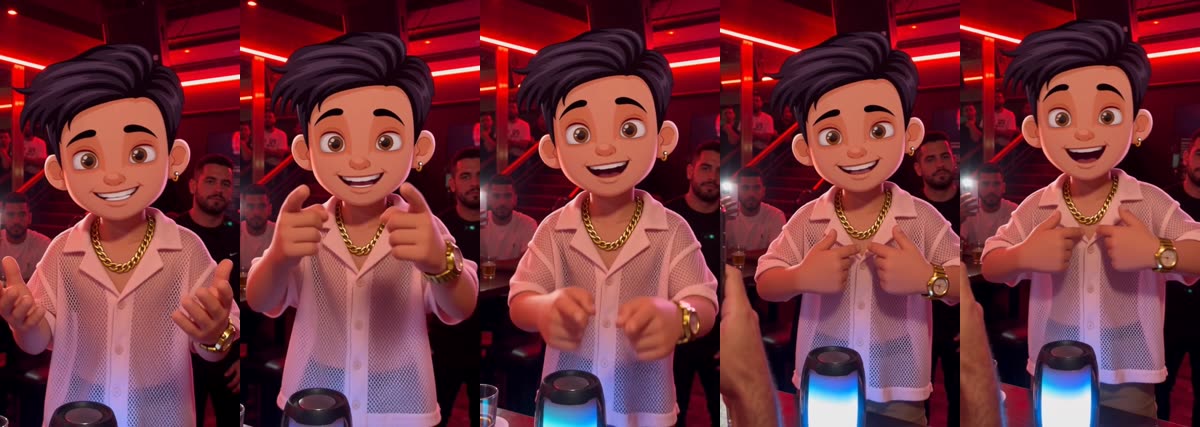
The Bulin 47 AI trend is a wave of short AI videos built around a viral freestyle by the Dominican artist Bulin 47, filmed in Spain. People put themselves, or friends who agreed, into the performance and post it on TikTok, Instagram Reels and YouTube Shorts. This page explains where it started and how the videos are made.
Key points
- The original is a spontaneous dembow freestyle at a restaurant venue in Spain, reported by LatiNation to have passed 50 million views.
- AI versions either edit the original footage or generate a new video from a photo, and the two approaches differ on rights and consent.
- Use only photos of adults who agreed, skip celebrities, and label the result as AI.
Where did the Bulin 47 freestyle come from?
According to a report by LatiNation, the performer is the Dominican urban artist Hancel Teodoro Vargas Reynoso, known as Bulin 47. The artist Kevin Wai met him at a restaurant venue in Spain with a portable speaker that played a heavy dembow beat. Dembow is a Caribbean beat pattern with roots in Jamaican dancehall that now sits at the centre of Dominican urban music, and its steady, punchy rhythm is why a single portable speaker was enough. Bulin 47 answered with an improvised freestyle and signature dance moves, including a line that quickly spread: "No ando en película ni ando en paquete, ya todos me conocen, soy Bulin 47". LatiNation reported more than 50 million views, although reported counts vary between sources.
- 1
A meeting at a venue in Spain
Kevin Wai approaches with a portable speaker
- 2
An improvised freestyle
Dembow beat, rhymes and dance moves
- 3
The clip goes viral
Millions of views on social platforms
- 4
AI versions appear
Creators remix it with other faces
Why did AI versions take off?
The clip has everything a remix needs. It is short, loud and full of movement, the beat is instantly recognisable, and the hook can be recreated in seconds, so it works like a meme template: easy to copy, easy to recognise, easy to share (that is an analogy, not a claim about how any single video spread). It also fits vertical feeds, where a few seconds of motion is enough to stop a scroll. LatiNation reported that AI edits featuring football stars such as Kylian Mbappé, Lionel Messi, Cristiano Ronaldo and Erling Haaland helped push it further. Those edits were made by third parties. Once the first ones appeared, anyone with a photo and a free evening could try the same idea with their own face.
- Short clip
- Recognisable beat
- Easy to recreate
- Fits vertical feeds
- Anyone can join
How are Bulin 47 AI videos made?
There are two broad approaches, and the difference matters for rights and consent. The first edits the original footage: a tool takes the finished clip and replaces the performer's face with another person's. The second generates a new video: a tool starts from a photo and a text description and creates a fresh scene, moves and vocals. Editing keeps the original motion exactly but reuses someone else's recording and audio. Generating gives up that exact match and reuses nothing. Neither is wrong in itself, but if you use a tool you should know which one it is, because it decides what you are allowed to share and who has to agree.
Editing the original clip
Follows the original exactly
- Replaces the performer in existing footage
- Reuses another person's recording and audio
- Can raise copyright and consent questions
- Every result looks the same apart from the face
Generating a new video
Different every time
- Starts from a photo and a text description
- Creates a fresh scene, moves and vocals
- Uses none of the original footage, so it is similar, not identical
- Results vary from render to render
What does Bulin 47 AI do differently?
Bulin 47 AI takes the second approach. You upload one photo, and an AI video model generates a new short video of that person performing a dembow freestyle in a scene made to be similar to the viral clip, with music and a crowd. The model is Seedance 2.5 from ByteDance, reached through the Kie.ai API platform. The video is similar to the viral clip, not identical, and an exact match is not guaranteed. No footage, audio or performance from the original clip is used, and there is no free-text prompt, so every render starts from the same fixed description. You choose the length, resolution and frame, and the price is shown before you generate. The step-by-step version is in how to make a Bulin 47 AI video.
- 1
Your photo
An adult who agreed
- 2
A fixed description
A scene similar to the viral clip
- 3
Seedance 2.5
Through the Kie.ai API platform
- 4
A new MP4
In My videos, ready to download
| Option | Choices |
|---|---|
| Length | 5, 12 or 23 seconds |
| Resolution | 480p or 720p |
| Frame | 9:16, 1:1 or 16:9 |
| Price | From 22 credits; a full 23 second 480p video is 100 credits, one $9.99 pack, and 720p HD costs about 2.25 times as much |
How can you join the trend responsibly?
Joining the trend is fun, and a few habits keep it that way. Use a photo of yourself or of an adult who clearly agreed, because a face is personal data and other people should decide where theirs appears. Leave out minors, celebrities and other public figures, since they cannot agree and the result could mislead viewers about who is really performing. Label your video as AI generated when you post it. Major platforms ask creators to disclose realistic AI content, and a clear label also keeps your audience on your side. Keep the video to personal, non-commercial use. These are the same rules the tool enforces, set out in the Acceptable Use Policy.
- Adults only
- Your photo or someone who agreed
- No celebrities
- Label it as AI
- Personal use
Make your own version
One photo in, a short rap video out. Similar to the viral clip, never identical, and always labelled as AI.
Make my video →Frequently asked questions
- What is “Dame Hombro” by Bulin 47?
- A follow-up single by Bulin 47 and Kevin Wai, released shortly after the viral freestyle video: a Spanish-language Dominican dembow track, published on YouTube as “Bulin 47 X Kevin Wai - Dame Hombro (Video Oficial)” and listed on Shazam and Audiomack. Diario Libre has also reported on “Dame hombro” trending online. The song is their work; Bulin 47 AI has no official connection with Bulin 47 or Kevin Wai.Sources: Shazam, Audiomack, Diario Libre
- Is the Bulin 47 AI trend official?
- No. It is a fan-made trend. Bulin 47 and Kevin Wai are not involved in our tool, and we are not affiliated with them or with any label or platform.
- Is a Bulin 47 AI video the same as a face swap?
- Not in our case. A face swap replaces the face in a finished video. Our tool starts from your photo and generates a new video, so the scene is similar to the original but the faces, moves and vocals are generated and never identical.
- Can I put a footballer or another celebrity in the video?
- No. Photos of celebrities and public figures are not allowed, because they have not agreed to appear and the result could mislead viewers. Use your own photo or that of an adult friend who agreed.